




The lithium battery pack is one of the most advanced and widely used energy storage solutions across various industries today. Thanks to its outstanding features—such as high energy density, long lifespan, fast charging capability, and excellent reliability—it has become a preferred choice in electronic devices, electric vehicles, energy storage systems, and many other industrial applications.
A battery pack typically consists of several lithium cells connected together and managed through precise control circuits to deliver optimal performance. Due to its numerous advantages, this technology has replaced many older types of batteries and plays a crucial role in advancing modern innovations. In this article, we will explore the concept of lithium battery packs, their types, applications, and key benefits.
What Is a Lithium Battery Pack?
A lithium battery pack is a collection of multiple lithium cells connected in series or parallel to provide the required voltage and capacity for various applications. Each lithium cell stores and delivers energy independently, but when combined in a pack, the cells work in harmony to achieve higher performance and efficiency.
These packs are typically equipped with a Battery Management System (BMS) that monitors charging, temperature, and cell health to prevent issues such as overcharging or overheating—significantly extending the pack’s lifespan.
Thanks to their high energy density, long cycle life, and fast charging speed, lithium battery packs are widely used in devices such as smartphones, laptops, electric vehicles, and large-scale energy storage systems.
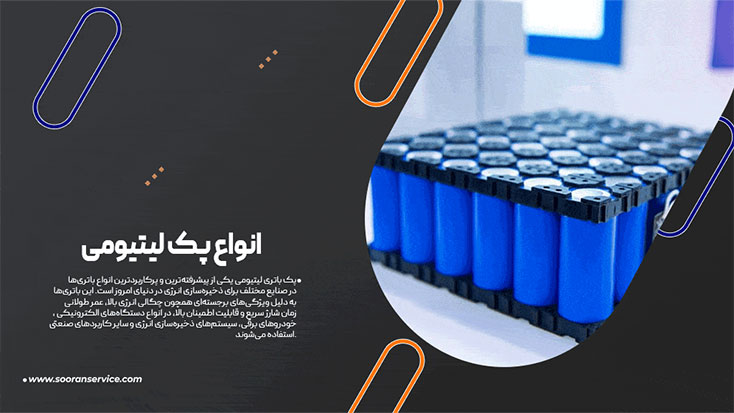
Types of Lithium Battery Packs
Lithium battery packs are categorized into several types depending on their configuration and intended applications. Each design offers specific electrical characteristics and advantages:
1. Series Battery Pack
In a series configuration, the cells are connected end-to-end to increase the overall output voltage of the pack. The total voltage equals the sum of all individual cell voltages, while the capacity remains the same as that of a single cell.
2. Parallel Lithium-Ion Pack
In a parallel connection, multiple cells are connected side-by-side to increase the total capacity of the pack without changing the voltage. This configuration is commonly used in home energy storage systems that require high capacity and extended usage time.
3. Hybrid Lithium Battery Pack (Series–Parallel)
A hybrid configuration combines both series and parallel connections, simultaneously increasing both voltage and capacity. In this design, multiple series-connected groups are linked in parallel to achieve higher energy output and longer runtime.
4. Flat Lithium-Ion Pack
These flat or rectangular battery packs are specifically designed for applications where space efficiency and compact design are crucial. They are ideal for slim devices or products with limited internal space.
5. Cylindrical Battery Pack
Cylindrical packs consist of multiple cylindrical lithium cells, available in various sizes and capacities. This type is widely used in industrial equipment, electric bikes, and power tools due to their durability and stable performance.
Applications of Lithium Battery Packs
Thanks to their high energy density, long lifespan, lightweight design, and fast charging capability, lithium battery packs are used across a wide range of industries and devices.
1. Electric and Hybrid Vehicles
Lithium battery packs are widely used in electric and hybrid vehicles.
Their high capacity and long cycle life make them the main power source for electric motors, ensuring efficient performance and extended driving range.
2. Portable Electronic Devices
One of the most common applications of lithium battery packs is in portable electronics.
Devices such as smartphones, laptops, tablets, smartwatches, and digital cameras rely on these batteries to deliver long-lasting power in compact and lightweight designs.
3. Energy Storage Systems
Lithium battery packs play a crucial role in home and industrial energy storage systems, including solar energy setups.
They store the energy generated by solar panels and release it when needed, enabling efficient load balancing and backup power supply during peak hours or outages.
4. Robotics and Drones
In robotics and unmanned aerial vehicles (UAVs or drones), lithium battery packs are used as reliable power sources.
Their high energy output and low weight allow for longer operational time, improved maneuverability, and reduced downtime for recharging — critical for both industrial and recreational use.
Price of Lithium Battery Packs
The price of lithium battery packs is influenced by several key factors that collectively affect both production costs and final market value.
One of the most significant factors is the type and quality of lithium cells used in the pack. Cells with higher energy density and superior build quality typically come at a higher cost.
In addition, the capacity and voltage of the pack have a direct relationship with its price — the higher the capacity and voltage, the more cells and raw materials are required, resulting in a higher overall cost.

Advantages of Buying a Lithium Battery Pack
Purchasing and using lithium battery packs offer numerous advantages, making them one of the most popular choices across various industries. Some of the key benefits include:
- Lithium batteries can store a large amount of energy in a relatively small and lightweight package due to their high energy density.
- Lithium battery packs have a much longer lifespan compared to many other types of batteries. They can typically endure thousands of charge and discharge cycles without significant capacity loss.
- One of the major advantages of lithium batteries is their short charging time. These batteries can be fully charged within a relatively short period, which is particularly useful for devices like smartphones and laptops that require quick charging.
- Compared to other types of batteries, lithium batteries lose their capacity at a much slower rate over time. This means that even after prolonged use, they still perform well and do not require frequent replacement.
Conclusion
As mentioned in the article, lithium battery packs play a vital role in many advanced technologies and industries. From electric vehicles to portable electronic devices, these batteries have become one of the primary choices for energy storage due to their high performance and reliability.
Having sufficient knowledge and understanding of lithium battery packs, their applications, and their functionality is highly beneficial in this field.
Therefore, to obtain more detailed information, simply contact us — our specialists and consultants will provide you with all the necessary guidance and insights.

No comments yet.